What the Railway Outage Teaches You About Who Owns Your Deployment
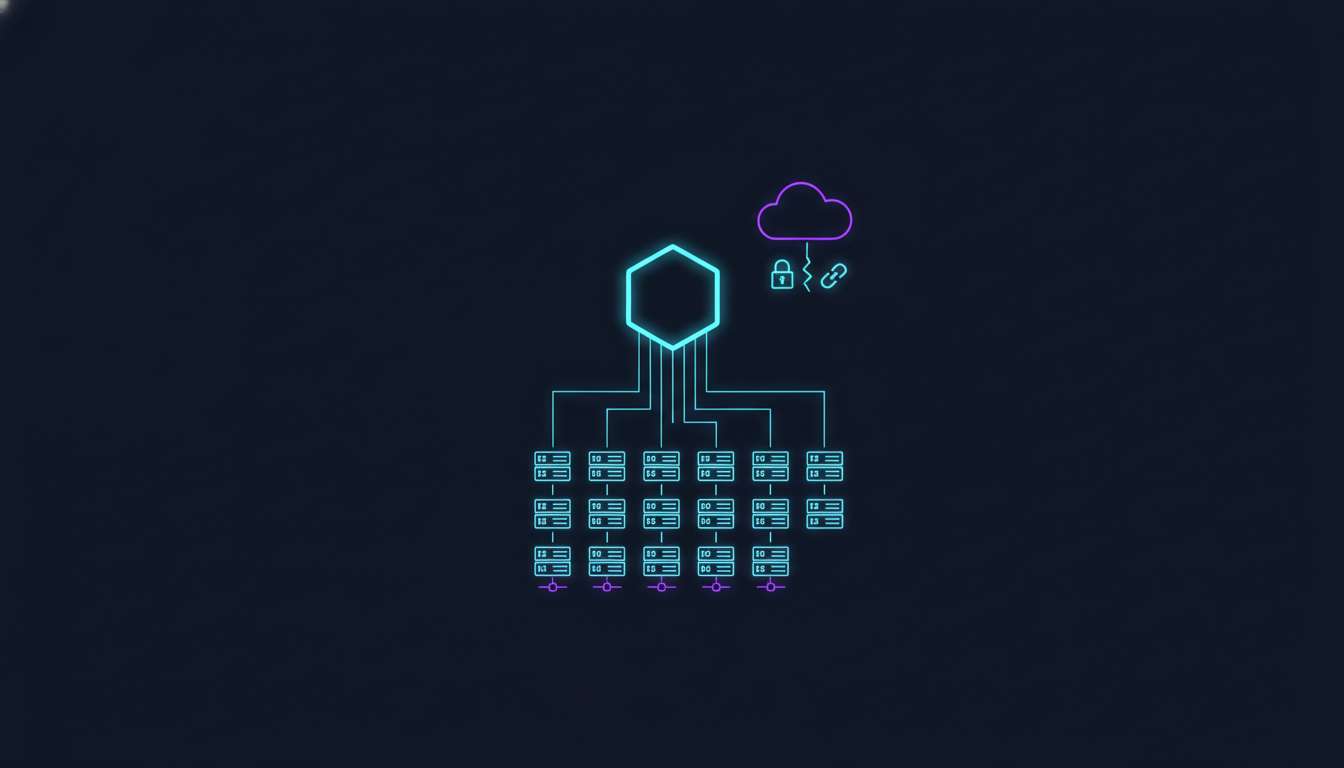
On May 19-20, 2026, Railway went dark for roughly eight hours. Not because of a bad deploy, a bug, or a traffic spike — but because Google Cloud suspended Railway's production account with no notice. Railway's control plane runs on GCP, so when that account froze, the blast radius wasn't limited to workloads sitting on Google's infrastructure. It reached apps running on AWS and bare metal too.
If you ran on Railway, your app might have been hosted on hardware that was perfectly healthy and completely reachable — and you still couldn't deploy, scale, or in some cases keep serving traffic, because the brain that orchestrated all of it was locked out by a billing action you had no part in.
Let's be honest about what this is and isn't. This is not a "look how unreliable Railway is" post, and it's definitely not a "Deployra never goes down" pitch — nobody gets to make that promise. It's a post about a question most of us never ask until it's too late: who actually owns your deployment?
First, credit where it's due: Railway handled this well
Before the architecture lesson, give Railway its due, because they earned it.
- The transparency was exemplary. Railway published a detailed public incident report walking through exactly what happened, when, and why. That is the gold standard for how to treat your users during a crisis — no spin, no hiding behind a status page.
- This wasn't their bug. The trigger was a third party (Google Cloud) suspending an account "without cause," as The Register reported. Railway's founder described being "gobsmacked." You can build an excellent platform and still get knocked offline by a provider decision you never saw coming.
- Railway is a genuinely good product. Git-push deploys, clean UX, managed databases. None of that changed because of one bad day. Plenty of teams will rightly stay.
So this isn't a gotcha. It's the opposite: if a platform this well-run can be taken down by a single provider's policy action, the failure mode is structural, not specific. It's worth understanding — wherever you host, and whether or not you're shopping for a Railway alternative.
The real lesson: your control plane is a single point of failure you forgot about
Here's the thing most deployment discussions miss. When you evaluate a platform, you look at uptime, regions, redundancy for your app. You rarely ask where the control plane — the system that builds, schedules, scales, and routes your workloads — actually lives, and who can switch it off.
In the Railway incident, the workloads weren't the problem. The orchestration layer was. And because that layer was concentrated in one cloud account, a single administrative action upstream propagated downward to everything it managed, regardless of which underlying infrastructure each app sat on.
That's the part worth internalizing: redundancy in your app doesn't help if there's no redundancy in who controls your app. Multi-region means nothing if one billing dispute can freeze the brain that drives every region.
What "owning your deployment" actually means
"Own your deployment" gets thrown around as a slogan, so let's be precise. Ownership is really a spectrum across three layers:
- Your code and data — almost everyone owns this. It's in Git and your database.
- The control plane — the orchestrator that turns your code into running services. On a fully managed platform, the vendor owns this entirely. You don't get the keys.
- The underlying compute — the servers your containers run on.
The Railway outage was a failure at layer 2. You can have full ownership of layers 1 and 3 and still be helpless if a vendor exclusively owns layer 2 and gets locked out of it.
Real ownership means the control plane runs in infrastructure you hold the account for — so a third party can't suspend the orchestrator out from under you. That's the gap self-hosting closes.
Where self-hosted, Kubernetes-based deployment changes the math
This is the architectural reason Deployra exists. Deployra runs your apps on Kubernetes, and the orchestration is handled by our kubestrator service driving that cluster. The important word is your cluster.
When the control plane is Kubernetes running in an account you own:
- A single managed provider's billing or policy action against a vendor doesn't freeze your orchestrator. There's no shared third-party account whose suspension cascades to you, because the system that schedules and scales your workloads lives in your infrastructure.
- You hold the keys. Kubernetes is an open, portable standard. Your deployment definitions, your services, your scaling rules — they're not trapped inside a proprietary control plane you can never access.
- The platform layer and the workloads share the same blast radius — yours, not a vendor's. If something goes wrong, it's within a boundary you control and can act on, rather than a queue behind a vendor's support ticket.
You still get the parts that made managed platforms pleasant. Connect a Git repo, Deployra builds a Docker image and rolls it out on Kubernetes with health checks, automatic SSL, custom domains, and autoscaling (HPA). Git push to live URL — without handing the keys to your control plane to someone who can be locked out of it.
Let's be precise about what self-hosting does and doesn't protect you from
If this post tells you self-hosting is a magic shield, it's lying to you. It isn't. Here's the honest boundary.
What owning the control plane protects against:
- A third party suspending a vendor's shared account and cascading that to your orchestration. That specific failure — the Railway one — doesn't apply when the control plane is in your account.
- Being unable to access or migrate your deployment configuration because it's locked inside someone else's proprietary system.
What it does NOT protect against:
- Your own cloud account getting suspended. If your underlying infrastructure provider freezes your account, you have a problem too. Ownership moves the risk; it doesn't delete it. The difference is the action has to be against you, on infrastructure where you're the customer of record, not against an intermediary you never chose.
- Regional outages, hardware failures, or your own bad deploys. Kubernetes gives you tools (replicas, health checks, autoscaling) to handle these, but it's not automatic invincibility.
- The need to think about resilience at all. Self-hosted means more of the decisions are yours. That's the point — and the responsibility.
No honest platform promises zero downtime. What you can choose is whether a single vendor's administrative action against an account you don't control is allowed to be one of your failure modes. With a self-hosted, Kubernetes-based setup, it isn't.
A quick gut-check for your own stack
You don't have to switch anything to take the lesson. Spend ten minutes and answer these about wherever you deploy today:
- Where does the control plane run? Whose cloud account owns the system that builds and schedules your apps?
- Who can switch it off? Could a billing dispute, policy action, or suspension against a third party take you offline?
- Can you get your config out? If the platform vanished tomorrow, do you have portable deployment definitions, or are they locked in a proprietary format?
- Does your redundancy cover the orchestrator, or just the workloads?
If the answers make you uncomfortable, you've found the same gap the Railway outage exposed — and it's worth closing on your terms, before a provider closes it for you.
The takeaway
Railway's bad day wasn't really about Railway. It was a clean illustration of a risk hiding in almost every fully managed platform: you can own your code, your data, and even your servers, and still not own the one thing that keeps them running.
Deployra's answer is to put the control plane on Kubernetes in infrastructure you own, so the orchestrator can't be locked out from under you by a vendor's account problem — while keeping the Git-push simplicity and transparent, predictable pricing (Web Service plans from $3.17/month) that made managed platforms worth using in the first place.
That's not a promise of perfect uptime. It's a promise about who holds the keys.
Related Articles
- Railway Alternative: The Best Platforms for Developers in 2025
- Coolify Alternative: Self-Hosted Docker Deployment Platform
- Kubernetes Alternative for Simpler Deployments
Own Your Deployment
You can't control whether a provider has a bad day. You can control whether their bad day becomes yours. Try Deployra — self-hosted, Kubernetes-based deployment with Git-push simplicity and transparent pricing from $3.17/month.